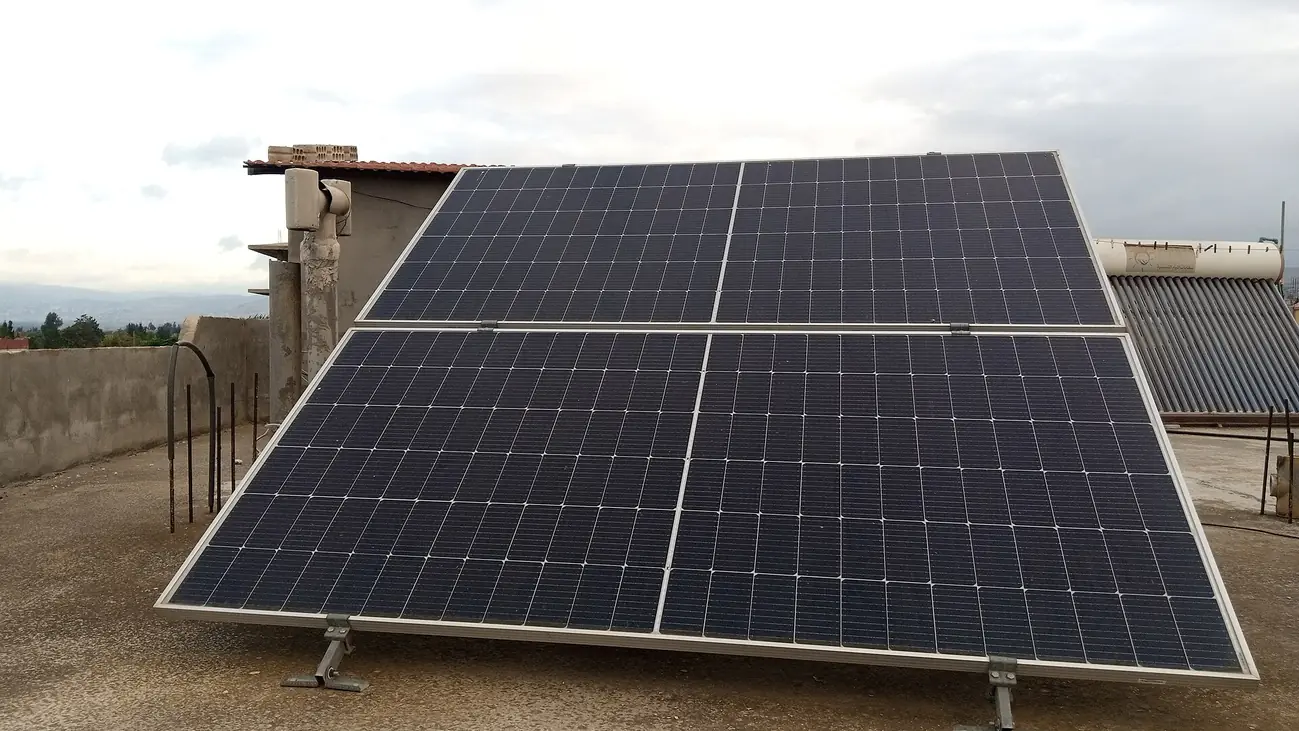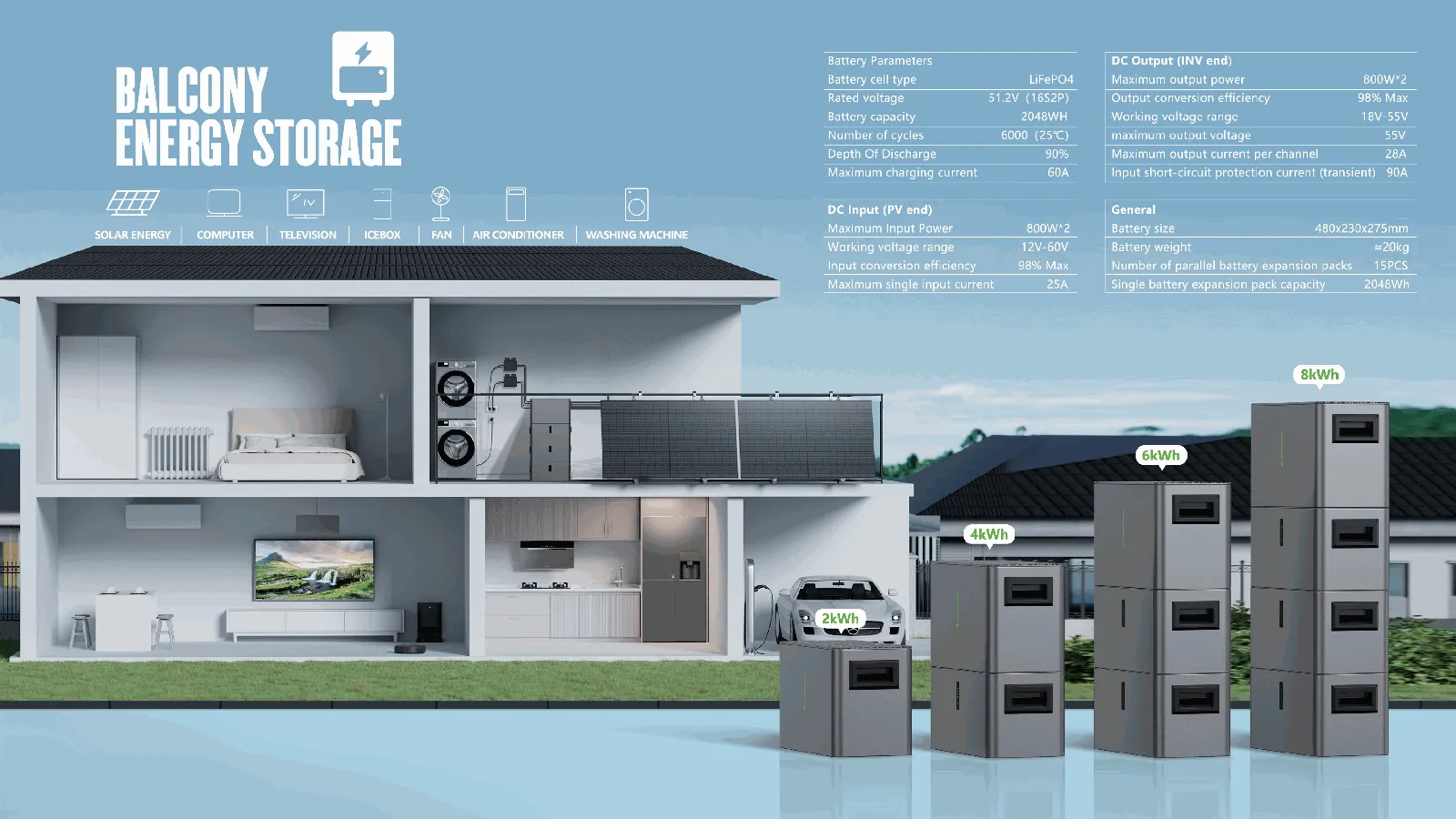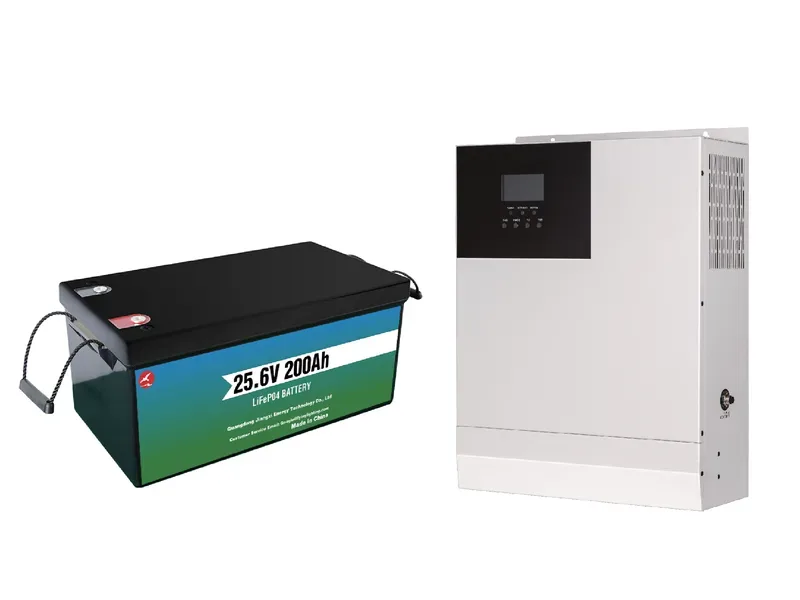
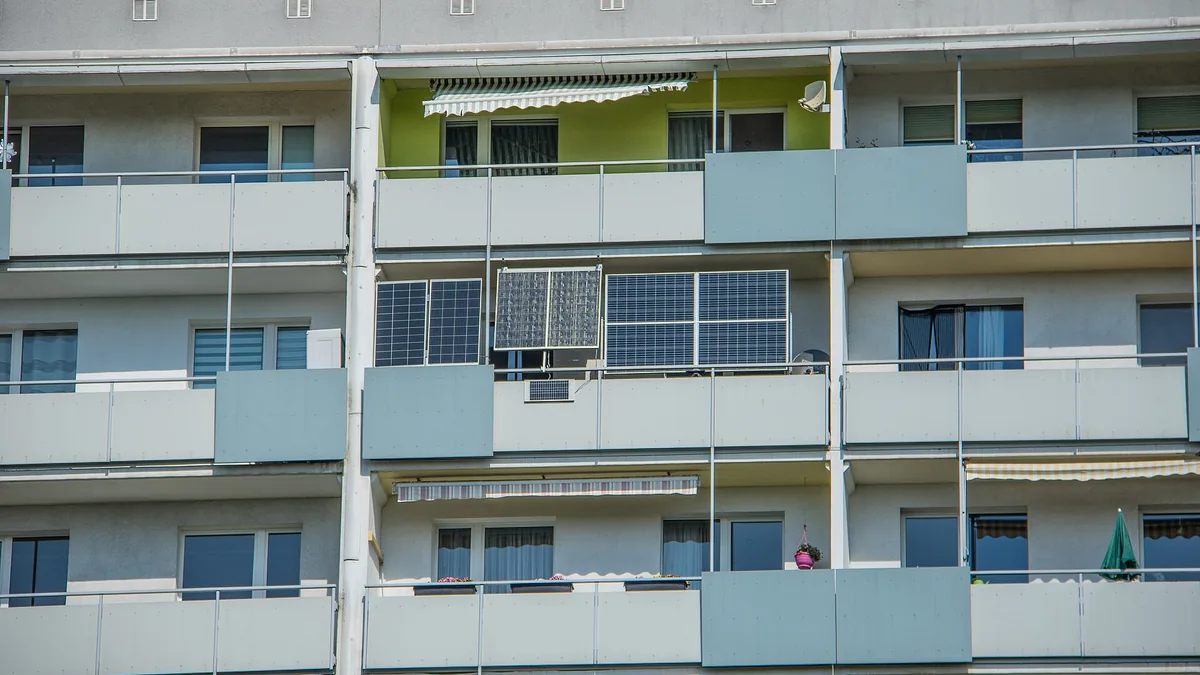
A balcony solar battery storage system is a plug-in pack that sits between one or two balcony PV modules and a wall socket, storing the midday surplus and releasing it in the evening. The pack we build for this role is rated 2,048 Wh at 51.2 V, takes two 800 W PV inputs and can be paralleled up to 15 packs. The job is narrow and useful: it moves solar energy in time rather than in distance, which is what a rented flat with two modules on a railing actually needs.
What is a balcony solar battery storage system?
A balcony solar battery storage system is a compact LiFePO4 pack with MPPT inputs and an AC output, connected between balcony PV modules and a household socket. It charges while the modules produce more than the apartment consumes, then releases that energy in the evening instead of exporting it for no payment. No roof, no drilling, no fixed wiring.
The category exists because of a mismatch in timing, not a shortage of generation. A balcony array of 600 to 2,000 Wp peaks around midday, when most flats draw a few hundred watts at most; demand rises in the evening, when the modules are already producing little. Storage closes that gap within the plug-in rules that allow a tenant to install without an electrician. It is not a substitute for a wired home battery: it feeds the flat through a socket, keeps no circuits alive during an outage unless the model is built for backup, and its bus is a low-voltage 51.2 V pack rather than a distribution-board installation.
How does energy flow from the panel to the flat?
Energy moves on the DC side into the pack and back out as AC. The modules feed DC into two MPPT inputs rated 800 W each, the pack stores it at 51.2 V nominal in a 16S2P LiFePO4 arrangement, and an inverter returns AC at 800 W per output channel into the socket and the apartment wiring behind it.
Two numbers describe the practical side of that flow. Charging first: 1,600 W of PV input fills a 2,048 Wh pack in about 1.3 hours of peak production, roughly 1.4 hours once conversion losses are counted — a balcony array rarely delivers that continuously, so read the figure as the floor, not the schedule. Discharge second: 800 W per channel means a kettle, a hair dryer or an iron will not run from a single channel even with a full pack, and any high-draw appliance belongs on the grid side of the design.
Because the enclosure contains the MPPT, the battery and the inverter, the installation stays at three items: modules on the railing, one box on the floor or a shelf, one cable to a socket. That simplicity is the product. It is also why the same hardware is sold as a balcony system in Germany and as a small all-in-one cabinet elsewhere.
How much usable energy does a 2,048 Wh pack really give?
The datasheet figure is 2,048 Wh per pack, but usable energy is lower because the BMS stops discharge at 90% depth. At 90% depth of discharge the usable figure is 1,843 Wh, about 1.84 kWh, and that is the number a runtime calculation must divide by — not the rounded 2 kWh on the label.
The rest of the pack specification matters for a different reason: 6,000 cycles at 25°C is a calendar argument, not a capacity argument. One cycle a day puts that figure two decades out, so the constraint in practice is the evening load you expect, not the cycle count. The enclosure is 480 x 230 x 275 mm at roughly 20 kg — small enough for a balcony corner, heavy enough that it wants a fixed position rather than a railing bracket.
How long does one pack carry an evening load?
Usable energy divided by load gives the runtime; the output limit caps it. From 1,843 Wh usable, a 300 W load runs about 6.1 hours, a 200 W load about 9.2 hours and an 800 W load about 2.3 hours. That last figure is also the inverter ceiling, so an oversized load trips the output before the pack is empty.
| Evening load | Runtime from 1,843 Wh usable | What that load looks like |
|---|---|---|
| 100 W | 18.4 hours | Router, LED lighting, phone charging, standby loads |
| 150 W | 12.3 hours | Above plus a small TV and a fan |
| 200 W | 9.2 hours | Above plus a second fan or a laptop |
| 300 W | 6.1 hours | Fridge averaging 50 W, TV, four LED lamps, router, two fans |
| 400 W | 4.6 hours | Above plus a small appliance cycling |
| 500 W | 3.7 hours | Short bursts of cooking or a vacuum cleaner |
| 800 W | 2.3 hours | One output channel at its rated limit |
A realistic evening in a two-room flat is the 300 W row: refrigerator averaging 50 W, an 80 W television, four 10 W LED lamps, a 10 W router, two 50 W fans and 30 W of phone charging. Just over six hours of coverage takes the flat from dusk to after midnight without touching the grid, which is the whole economic case for the pack — the energy was already being generated and was previously given away.
How many packs does a normal flat need?
Two rules of thumb carry the first estimate: about 1 kWh of storage per 1 kWp of modules, and a ceiling near 1.5 kWh per kWp where evening demand is high. A 2,000 Wp balcony array therefore lands between 2 and 3 kWh, which is exactly one 2,048 Wh pack.
Check the answer against the load rather than the modules. A 300 W base load held for five evening hours is 1.5 kWh, inside the 1.84 kWh a single pack supplies; the same load for twelve hours needs 3.6 kWh, which is two packs at 3.69 kWh usable. Oversizing is the more common mistake: winter output in central Europe falls to a small fraction of the summer figure, so a pack sized for a July surplus spends December half empty and a pack sized for a grey winter day is wasted for eight months. Size for the base load and let the grid carry the rest.
Can you add packs later?
Yes, at pack level and without a second inverter. The datasheet allows up to 15 parallel expansion packs of 2,048 Wh each, which takes one system to 30.72 kWh nameplate and about 27.65 kWh usable — the storage class of a wall-mounted home battery, reached by stacking identical packs instead of replacing the unit.
Two limits belong in the quotation rather than in the brochure. The first is the interconnect: parallel packs need the linking cable kit and the addressing that lets one BMS see fifteen packs, so ask for it as a line item. The second is structure: fifteen packs is roughly 300 kg before mounting frames, so expansion beyond two or three packs is a question for the building owner, not only for the installer. For distributors the expansion path is the sales argument — one SKU covers the entry buyer and the household that comes back for a second pack a year later.
Balcony storage, portable power station or wall-mounted battery?
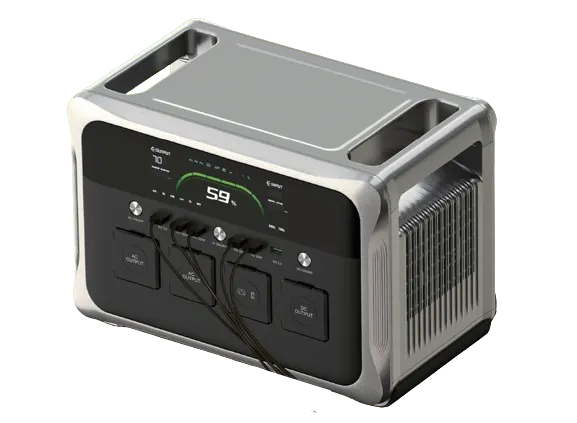
The three products answer different questions. A balcony pack feeds the flat's wiring through a socket and stays inside plug-in rules; a portable power station feeds only its own outlets and travels; a wall-mounted home battery feeds chosen circuits through a distribution board and needs an electrician. Capacity bands overlap far less than buyers assume.
| Decision point | Balcony storage pack | Portable power station | Wall-mounted home battery |
|---|---|---|---|
| Typical energy | 2,048 Wh per pack, up to 30.72 kWh in parallel | 0.32–0.96 kWh in the units we build | 5.12–40.19 kWh depending on family |
| Output | 800 W per output channel | 300–600 W rated, 230 V 50 Hz sockets | Through the inverter, e.g. 6 kW in the all-in-one cabinet |
| Installation | Plugs into a wall socket, no fixed wiring | None — carry, plug in, use | Fixed wiring, transfer switch, commissioning |
| What it feeds | The flat's wiring through the socket | Only its own outlets | Chosen circuits of the building |
| Expansion | Add parallel packs, up to 15 | Buy a second unit | Add battery modules |
| Grid rules | Plug-in framework of the country | None — it is an appliance | Grid connection and registration |
| Best fit | Rented flats, small base load, one or two modules | Outdoor work, events, mobile use | Whole-home or circuit-level backup |
What installation and grid rules apply?
Installation comes before capacity. A plug-in pack avoids fixed wiring, which is why it works in rented flats and listed buildings, but the country's plug-in rules set the legal ceiling: module power, inverter feed-in limit and registration requirements are national and change between years.
Germany, the largest balcony market in Europe, is the clearest example as reported in late 2026: feed-in is capped at 800 W, installed module power at 2,000 Wp, the unit must be registered in the Marktstammdatenregister, and these systems earn no feed-in tariff, so self-consumption is the entire economic value. Buyers should see the manufacturer's conformity declaration for the relevant VDE application rule, and it should name the exact model rather than a product family. Elsewhere the picture fragments: the United Kingdom's plug-in rules were still in transition during 2026, while most other markets either treat the pack as an appliance or have no specific framework, which is why the safe instruction is to confirm the local position with the grid operator before shipping a container.
Mechanically, one pack is about 20 kg inside a 480 x 230 x 275 mm enclosure — suitable for a balcony floor, not for a railing clamp. Our datasheet for this pack does not state a protection rating, so ask us for the IP class of the exact model and keep the position sheltered unless it is confirmed in writing.
What should a distributor confirm before ordering?
A quotation is only usable if it fixes the interface points. Ask for usable kWh and depth of discharge, the MPPT window per input, what each 800 W output channel physically is, the IP class for the mounting position, the certification scope that names the exact model, and the kit that joins pack two to pack one.
| Field | Why it decides the order |
|---|---|
| Usable kWh and depth of discharge | Runtime must be quoted on usable energy, not nameplate capacity |
| MPPT voltage window per input | Modules must sit inside the window at both ends of the temperature range |
| Output configuration | Two 800 W channels: confirm which are AC outlets before specifying loads |
| Protection rating | Balcony, garage or indoor placement changes the IP class required |
| Certification scope | Certificates must name the model and the market, not the category |
| Expansion kit | Parallel cabling and BMS addressing are separate line items |
| Pack dimensions and weight | 480 x 230 x 275 mm and about 20 kg set the shipping and handling plan |
Tell us the module wattage, the evening base load and the destination country and we will quote the pack count and the certification scope for that market, with the datasheet for the exact model attached. The hardware is on the balcony storage product page, the small-system options are on the balcony and micro storage solution page, and if the household needs more than balcony scale, start from the whole-home sizing guide or the 2 kWh capacity page. Matching the pack to an existing inverter is covered in inverter and battery matching.