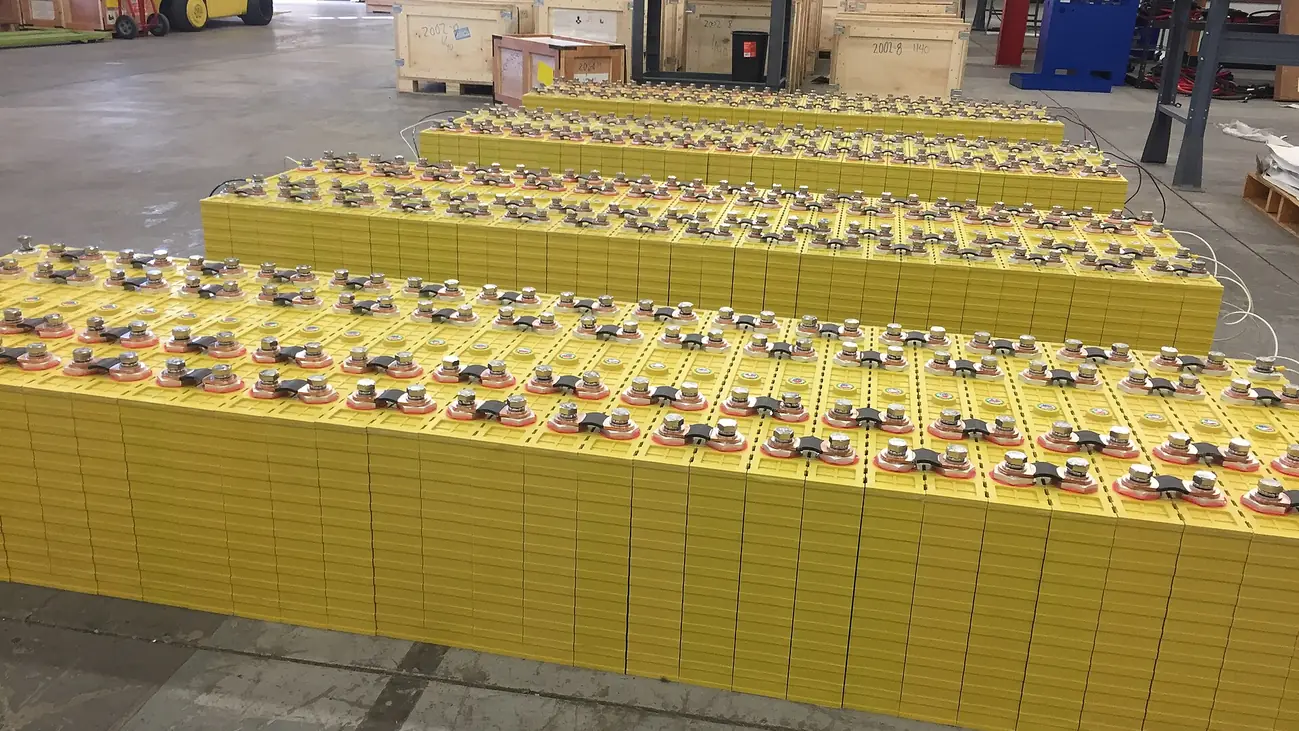
Battery cell grade is the single most important specification that is never printed on the marketing sheet. Grade A cells are the industry-standard cells that meet the datasheet spec; grade B and grade C cells are cells that failed a batch test and were re-sold at a discount. The grade decides how long the battery lasts, how safe it is and how many warranty claims you will field. This guide explains what the grades mean, how to tell them apart, and what you are really paying for.
What the grades mean
Cell manufacturers sort their production output into grades after testing. Grade A cells pass every test at full spec: rated capacity, internal resistance, self-discharge, voltage and thermal behavior all within tolerance, and they carry the full datasheet and traceability. Grade B cells failed a batch test or deviate from spec — lower measured capacity, higher internal resistance, or cells re-tested after a manufacturing anomaly — and are sold at a discount. Grade C cells are further from spec and carry a meaningful risk of premature failure or fast degradation. A battery pack built from B cells can look identical on paper, deliver slightly less capacity and degrade far faster in real use.
Why grade matters for safety
Grade is not just a performance label; it is a safety decision. A-grade cells are manufactured and tested to the tightest tolerances, which is exactly what you want when cells are packed tightly and cycled daily for a decade. B-grade cells have higher internal resistance, which means more heat during charge and discharge, faster aging and, in an extreme case, more thermal stress on the pack. For a system that sits in a home, a factory or a container, the extra cost of A-grade cells is cheap insurance against a lifetime of higher risk. Reputable battery brands specify A-grade cells and publish the cell source; a supplier that will not name the cell grade is usually selling something they do not want you to inspect.
The price difference
A-grade cells carry a premium of roughly 10% to 25% over B-grade cells of the same chemistry and capacity, and the premium is largest for the largest cells. The discount on B-grade reflects the real risk: a higher failure rate, faster degradation and a shorter useful life. The cost per usable cycle tells the real story — a B-grade battery that lasts half as long costs twice as much per cycle, so the "saving" on the purchase is reversed over the system life. For wholesale buyers, the temptation to save 15% on cells is the single most common way a product line quietly loses money on warranty claims.
How B cells end up in finished products
B-grade cells do not appear in the catalog by accident; they are assembled into packs that are then sold as "quality" batteries at a discount. This is the mechanism behind most "too good to be true" battery prices. A factory buys B cells, packs them, and quotes a system 15-20% below market. The pack tests fine in a short acceptance test — the differences only show up after months of cycling, when capacity fade accelerates. This is why a short test at acceptance is not enough; the grade has to be verified from the cell source, not from the pack behavior.
How to verify the cell grade
Verifying grade is harder than it looks, but four checks close most of the gap. Cell brand and datasheet: ask for the exact cell model and its datasheet, and confirm the cell is a standard product of a known manufacturer, not a white-labeled batch. Test reports: ask for the batch test reports for the cells in your pack — capacity, internal resistance, self-discharge. Traceability: ask whether each pack records the cell batch and serial, so failures can be traced. Warranty language: a serious warranty with a capacity retention clause and a defined cell source is itself a grade signal — a factory selling B cells rarely commits to a strong retention guarantee. A factory that produces cells in-house and can show the production and test line is far easier to verify than a trader who cannot name the cell origin.
What to put in the contract
If grade matters to you — and it should — put it in the contract. Specify A-grade cells from a named manufacturer, require the cell datasheet and batch test reports for the exact model, and define the acceptance test: measured capacity within a tolerance band, internal resistance within spec, and a capacity retention guarantee over the warranty period. Agree the consequence of B-grade substitution — a replacement or a refund — before the order, not after a failure. For wholesale buyers, this paragraph in the contract is worth more than any price negotiation, because it turns an unverifiable promise into an enforceable one.
Grade and the warranty connection
Cell grade and warranty terms are the same conversation. A warranty with a capacity retention clause — for example, 60-70% retention at year 10 — is only credible on A-grade cells, because B cells cannot hold that curve. A warranty without a retention clause tells you nothing about the cell quality. When comparing quotes, compare the retention guarantee, not just the warranty years. If one supplier quotes a strong retention guarantee on a known cell brand and another quotes the same capacity 15% cheaper with a vague warranty, the cheap one is almost certainly cheaper because of the cells, and the risk sits on your side of the contract.
Buying decisions for distributors and project buyers
For distributors building a product line, the grade decision is a brand decision: A-grade cells protect your brand from the warranty drain that B-grade creates. For project buyers, the grade decision is a life-cost decision: a system that must run for a decade on a commercial or utility site cannot afford the degradation curve of B cells. In both cases, ask the factory to state the cell source, grade and datasheet in writing, and to provide the test reports. As a manufacturer of LiFePO4 cells and battery systems, we produce A-grade cells in-house and can trace each pack to its cell batch — and we put the cell brand, grade and capacity retention guarantee in the quotation. Send us your capacity and application, and we will show you the grade in the quote, not just the price.