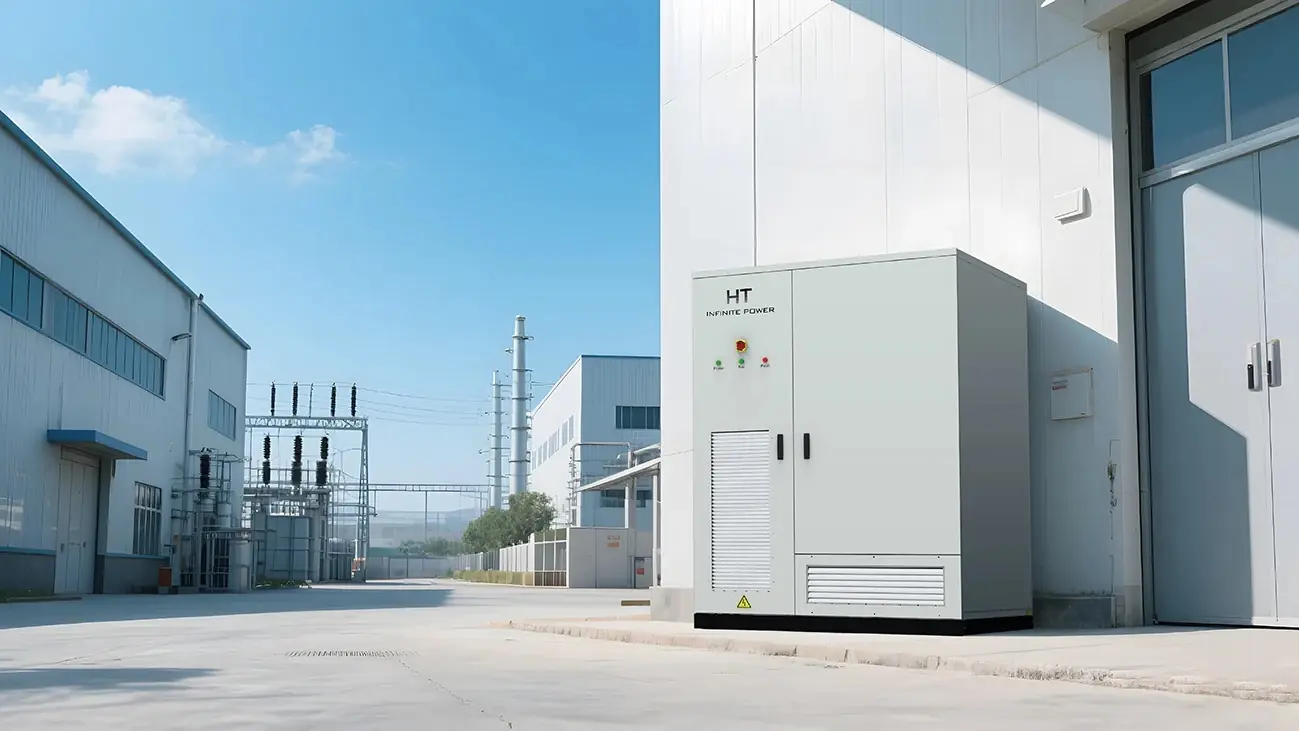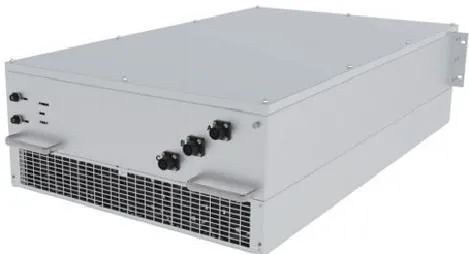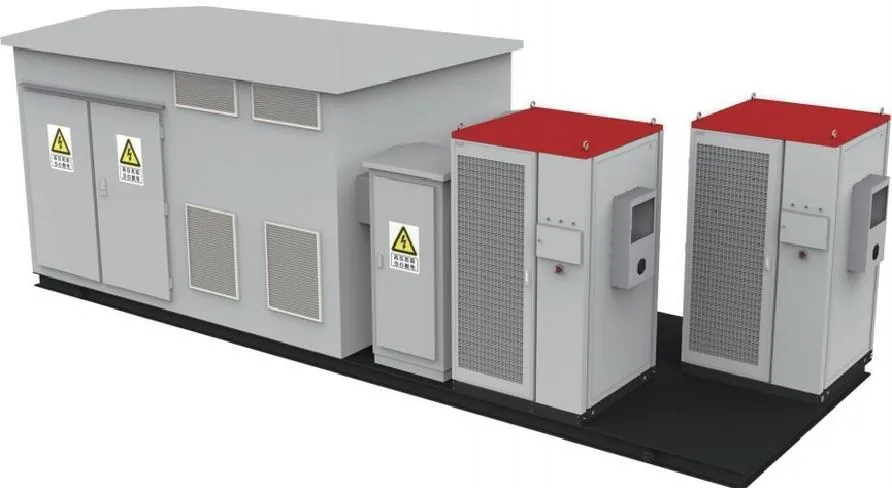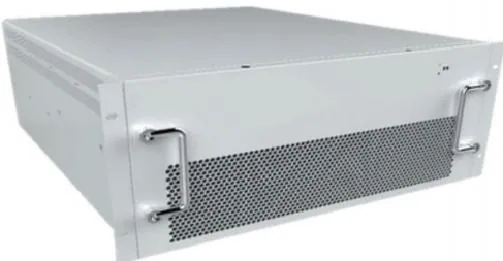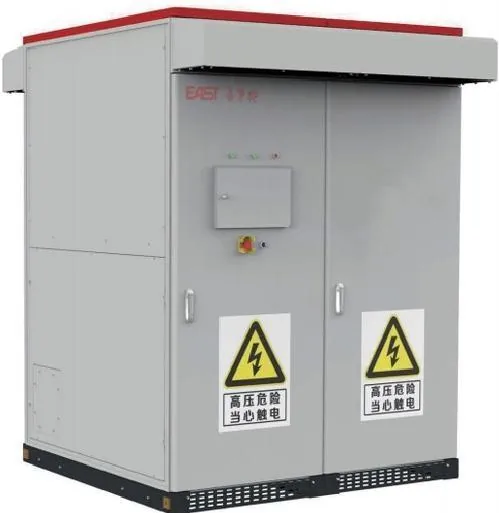
The PCS (Power Conversion System) is the component most buyers underspecify, and the one that determines whether the rest of your storage investment pays off. It converts DC from the battery to AC for the grid and back, and it sets the system's efficiency, grid-connection quality, protection and dispatch behavior. Choosing it well is a matter of working through nine checklist points — most of which take less than a minute each once you know the parameters to compare.
1. Rated power and overload capability
The PCS rated power must match the power the system needs to deliver, with headroom for transient overloads. Confirm the rated output in kW, the maximum overload capability and its duration, and the derating behavior at high ambient temperature — a PCS rated at 50°C may output less than its nameplate at 55°C. For a 1 MW project you might select a single 1 MW unit or parallel smaller units; confirm the parallel operation capability and how power sharing is coordinated. The overload rating matters because batteries routinely need brief high-power pulses for load transients and demand response.
2. DC voltage range and battery matching
This is the most common compatibility failure. The battery cluster voltage changes with state of charge, and the PCS DC input window must cover the entire working range of the battery — from fully discharged to fully charged — at all temperatures. A 1500V storage platform requires a PCS whose DC window covers the 1500V cluster voltage; a 1000V system needs the 1000V window. Ask for both datasheets and check the overlap before ordering. Also confirm the maximum DC current matches the battery cluster rating, so the battery can be charged and discharged at its rated rate.
3. Efficiency across the operating range
Efficiency is revenue. Ask for the efficiency curve, not a single peak number — most systems run at partial load for much of their life, and that is where efficiency differences are largest. A 98% versus 96% difference in round-trip efficiency translates into measurable energy loss over a 10-year life. Check both conversion directions and the standby consumption, since auxiliary and idle losses run even when the system is not cycling. For a storage project whose business case runs on arbitraging small price differences, efficiency is one of the few parameters you can compare directly between vendors.
4. Grid code compliance and certifications
The PCS must pass the grid-connection tests of your target market: frequency and voltage ride-through, reactive power capability, anti-islanding, harmonic limits. Confirm the specific grid code versions the PCS is certified against, and whether firmware updates for new grid code revisions are included in the warranty. Certifications to check include CE, UL or IEC, and market-specific codes such as VDE-AR-N or local utility requirements. A PCS certified for one market cannot be assumed to pass another — confirm the exact documents for your project's country before quotation comparison.
5. Cooling method and environmental rating
PCS cooling affects both reliability and usable capacity in hot climates. Confirm the cooling method (air or liquid), the operating temperature range, and the IP rating for the installation location — outdoor installations need a higher rating than a controlled electrical room. In coastal or dusty sites, confirm protection against salt and dust ingress. Ask how the cooling performs under sustained full load at your maximum ambient temperature, because a PCS that derates in summer costs you power exactly when demand is highest.
6. Protection features
A PCS is the main protection layer between the battery and the grid. Confirm the over/under voltage, over/under frequency, overcurrent, short-circuit, insulation monitoring and anti-islanding protection, and how it coordinates with the battery BMS and the grid-side breakers. Ask whether the protection settings are configurable and documented, and whether the factory provides the type-test report covering these functions. Protection coordination between battery, PCS and grid-side equipment is a frequent source of commissioning delays, so request the wiring diagrams and protection-setting sheets before delivery.
7. Communication protocols and EMS integration
The PCS must talk to the BMS and the EMS. Confirm the supported protocols (Modbus TCP/RTU, CAN, IEC 61850 or project-specific), whether they are documented, and whether the PCS can be controlled locally and remotely. The communication stack determines whether the storage system can integrate with your existing energy management platform or a grid dispatch system. Open, documented protocols are a soft parameter that quietly determines integration cost — a PCS that only speaks a proprietary protocol can lock you into one EMS for the life of the system.
8. Warranty, spares and after-sales
PCS is a power electronics product with a defined lifetime, so the warranty terms matter as much as the price. Confirm the warranty period, what is covered (power module, control board, fans, communication board), the remote diagnosis and on-site service response times, and the spare parts policy. A modular PCS design with field-replaceable power modules cuts downtime sharply compared with a sealed unit. Ask about firmware update policy and whether the factory holds regional stock or ships on RMA. For long O&M horizons, request the recommended spare parts list and current stock levels.
9. Quotation boundary and total cost
Finally, normalize the quotation. Confirm whether the price includes the PCS only, or also the step-up transformer, wiring, monitoring, commissioning and training. Confirm MOQ and lead time for wholesale purchases, and whether firmware updates and remote support are inside the warranty. When comparing vendors, ask each for the efficiency curve, the DC range datasheet and the type-test report — not just the nameplate power and price. A factory that manufactures the PCS in-house and shares the full documentation set will usually give you a cleaner boundary and a shorter commissioning time than a re-seller of someone else's units.
A 30-second scoring method
To keep vendor comparison fast, score each shortlist on five numbers: rated power and overload, DC range coverage of your battery, efficiency at partial load, the specific grid code certificates, and the warranty plus spares package. Give each a 1-5 score, weight them by what matters for your project, and the winner becomes obvious without drowning in spec sheets. We manufacture 1500V and 1000V PCS — string, string-plus-step-up and centralized — and provide the datasheets, efficiency curves and type-test reports up front. Send us your battery voltage range and project power, and we will confirm the matching PCS configuration with a clear boundary.