The lithium cell — the smallest unit of a battery — comes in three form factors: prismatic, pouch and cylindrical. The form factor affects how the cell is cooled, how it is contained, how dense it is and what it costs to assemble. For stationary energy storage, prismatic cells have become the dominant choice, with pouch and cylindrical cells serving specific niches. This guide compares the three so you can read a spec sheet with context and understand why most storage systems are built the way they are.
The three form factors
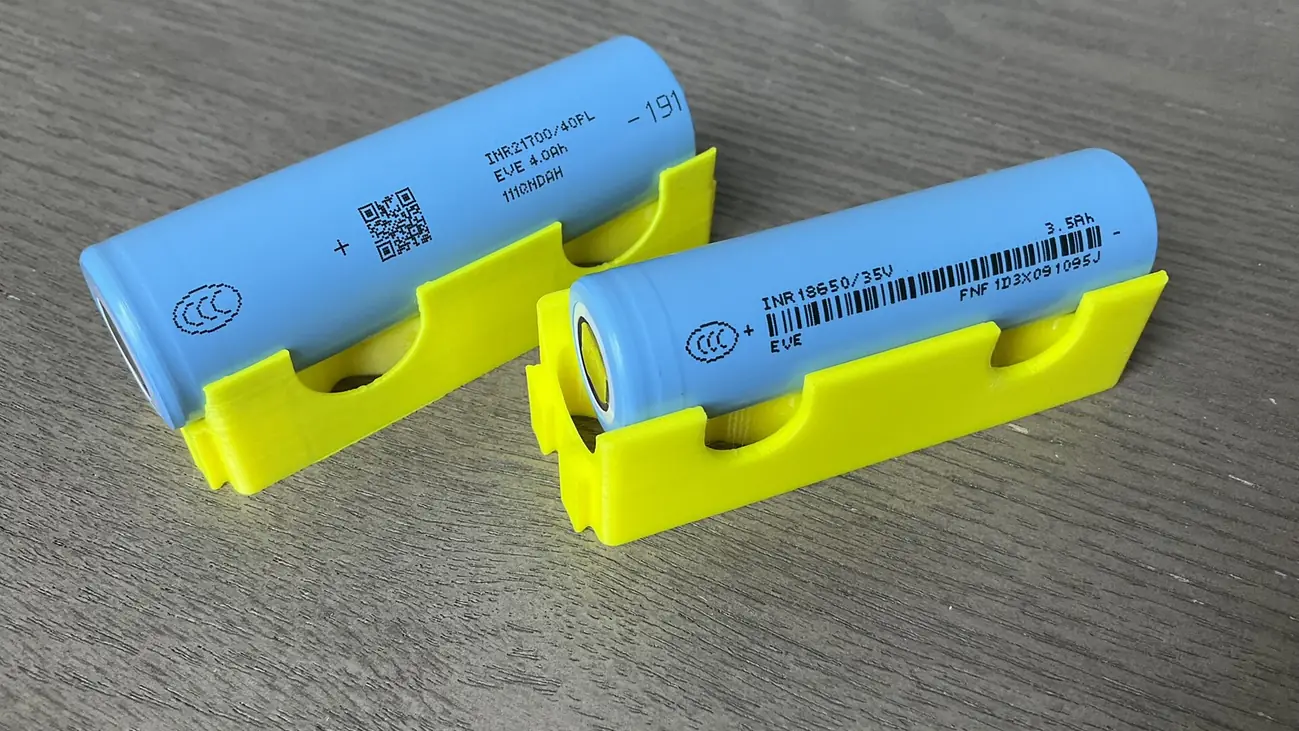
A cylindrical cell is a rolled electrode wound into a metal can — the classic 18650 and 21700 formats. A prismatic cell stacks the electrodes in a rigid aluminum case, giving a rectangular, hard-shelled cell. A pouch cell seals the electrodes in a soft aluminum-laminated film, forming a flat, flexible pouch. The differences sound mechanical, but they drive real engineering trade-offs in cooling, swelling, energy density and cost.
Comparison at a glance
| Factor | Prismatic | Pouch | Cylindrical |
|---|---|---|---|
| Case | Rigid aluminum | Soft laminate film | Rigid metal can |
| Energy density | High | Highest | Moderate |
| Cooling | Good via flat faces | Excellent via flat faces | Harder — round surface |
| Swelling control | Contained by case | Needs module pressure | Contained by can |
| Cell-to-pack efficiency | Good | Good | Lower at pack level |
| Manufacturing cost | Moderate | Low process, high module cost | High automation |
| Dominant use | Stationary ESS | Compact high-density packs | EVs, power tools, consumer |
Why prismatic dominates stationary storage
Stationary storage — home batteries, commercial cabinets, containers — standardizes on prismatic cells for three reasons. First, the rigid aluminum case contains electrode swelling, so the cell keeps a stable shape across thousands of cycles. Second, the flat faces give good thermal contact for liquid or air cooling, which matters in high-cycle stationary applications. Third, prismatic cells assemble into packs efficiently: fewer, larger cells per pack mean fewer connections and lower cost per watt-hour. Large-format prismatic cells, often 280-314 Ah and above, are the workhorse of the 2026 storage market.
Where pouch cells fit
Pouch cells have the highest energy density and pack well into thin, flat modules, which suits compact high-density products such as consumer electronics, some EV packs and specialized portable batteries. Their soft film case means the module must apply pressure to control swelling, adding mechanical complexity, and the film is more easily damaged, requiring careful handling and protection. In storage, pouch cells appear mainly where a compact form factor is a hard requirement rather than in mainstream stationary systems.
Where cylindrical cells fit
Cylindrical cells are the most automated to manufacture and are famous from the 18650 and 21700 cells in EVs, power tools and consumer products. At the pack level they are less efficient — the round shape leaves gaps, and many small cells mean many connections — which raises assembly cost for large stationary packs. Their strength is a highly consistent, high-volume manufacturing base and a proven safety history. They are used in some modular battery products and in applications that inherit EV supply chains, but they are not the default for large storage systems.
What the choice means for a buyer
For a stationary storage buyer, prismatic is the safe default: it is the established architecture, the cells are widely available in storage-optimized grades, and the ecosystem of PCS, racks and containers is built around it. The practical questions to ask a supplier are about the cell grade, the manufacturer, the cycle life at the operating depth of discharge, and the thermal design — not primarily about the form factor, because that is largely settled by the application. Form factor matters most when you have a specific space constraint, in which case a pouch or cylindrical product designed for that niche may be the right fit.
As a battery manufacturer, we build our home, commercial and container systems on large-format prismatic LiFePO4 cells, with datasheets, cycle curves and cell source documentation available per model. If you want to compare cell types for a specific application, send us the requirements and we will recommend the configuration.