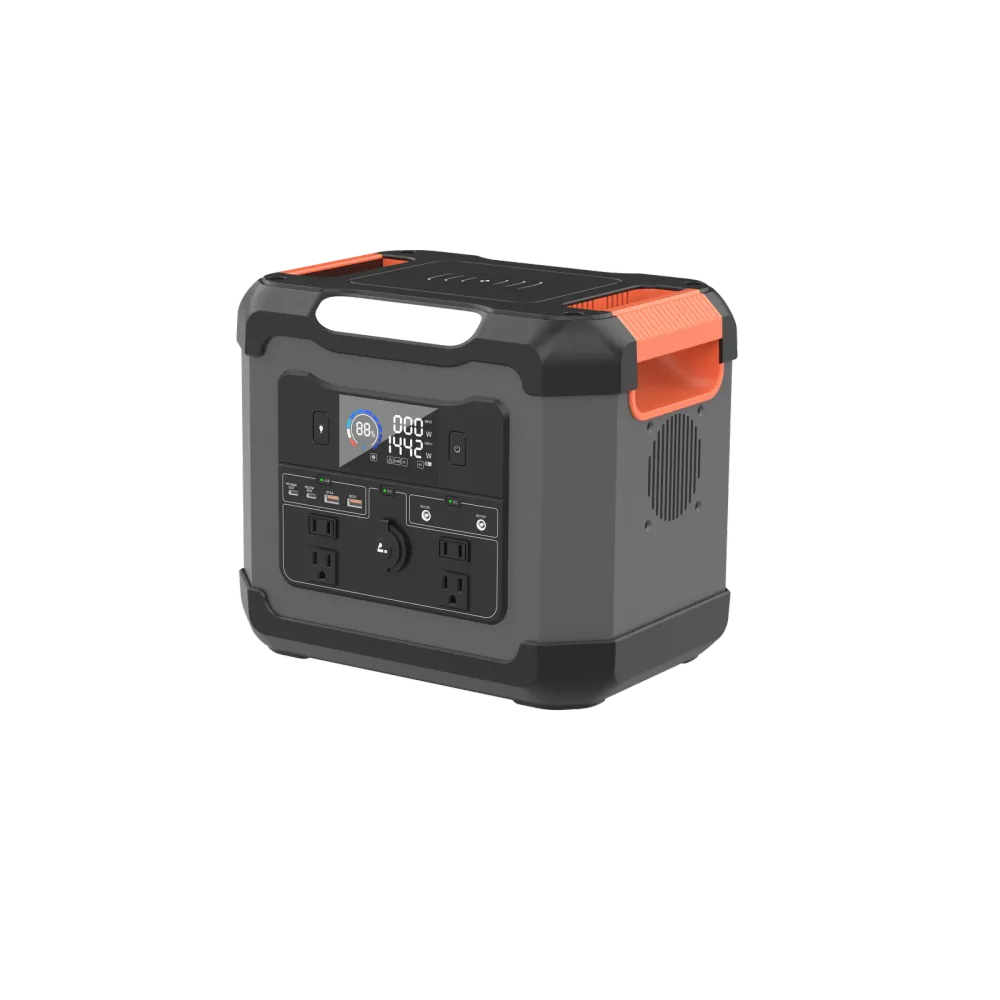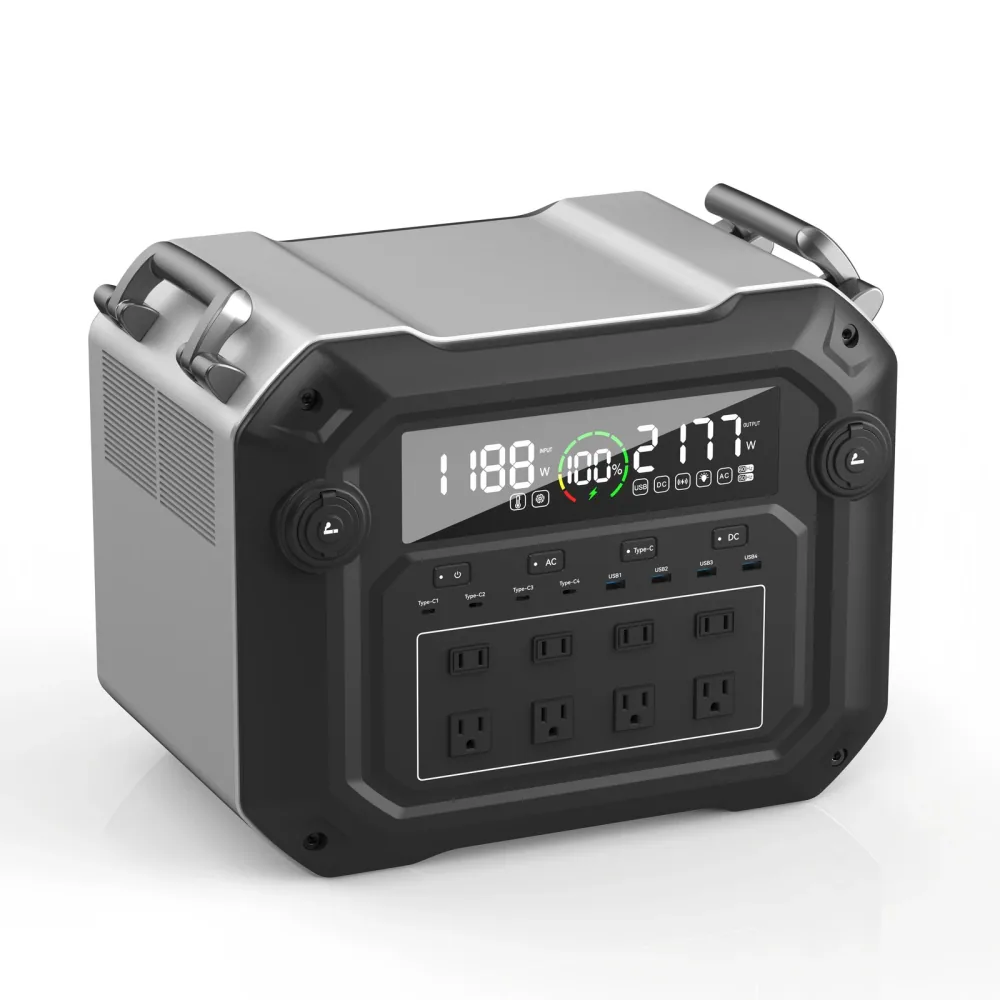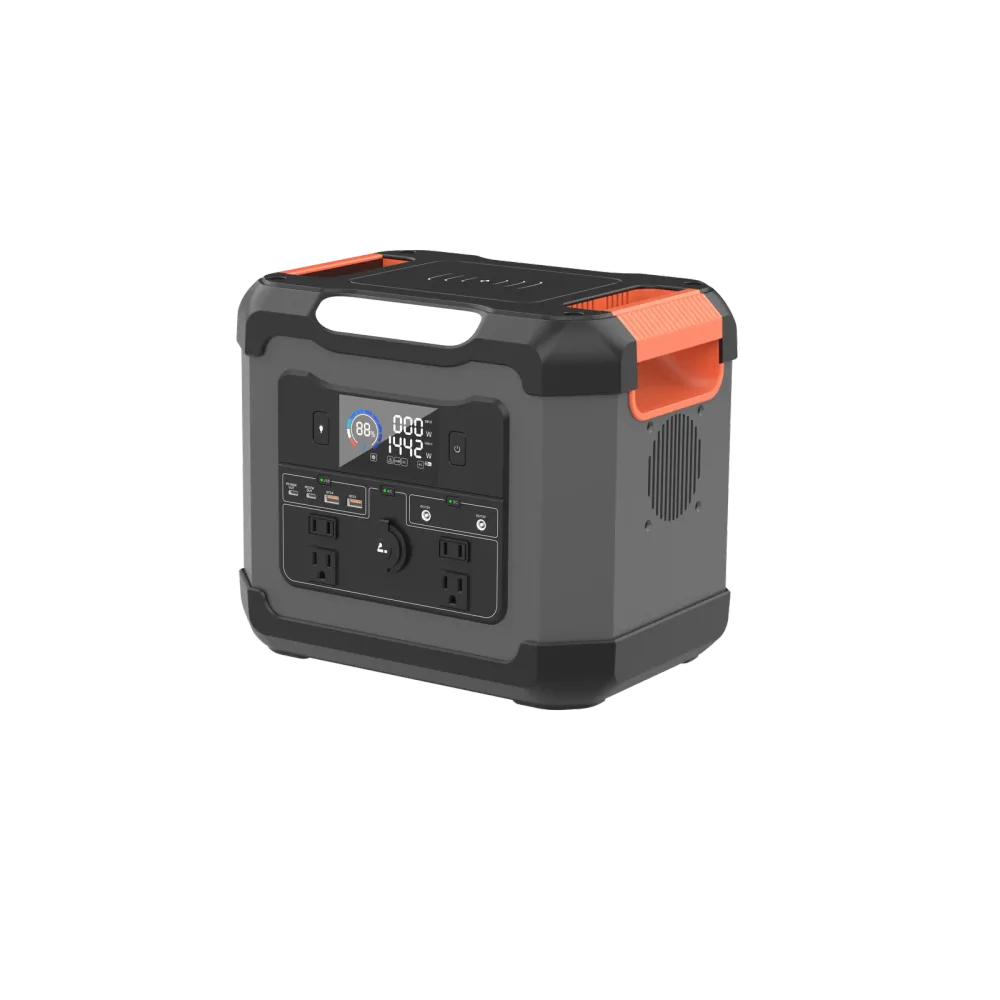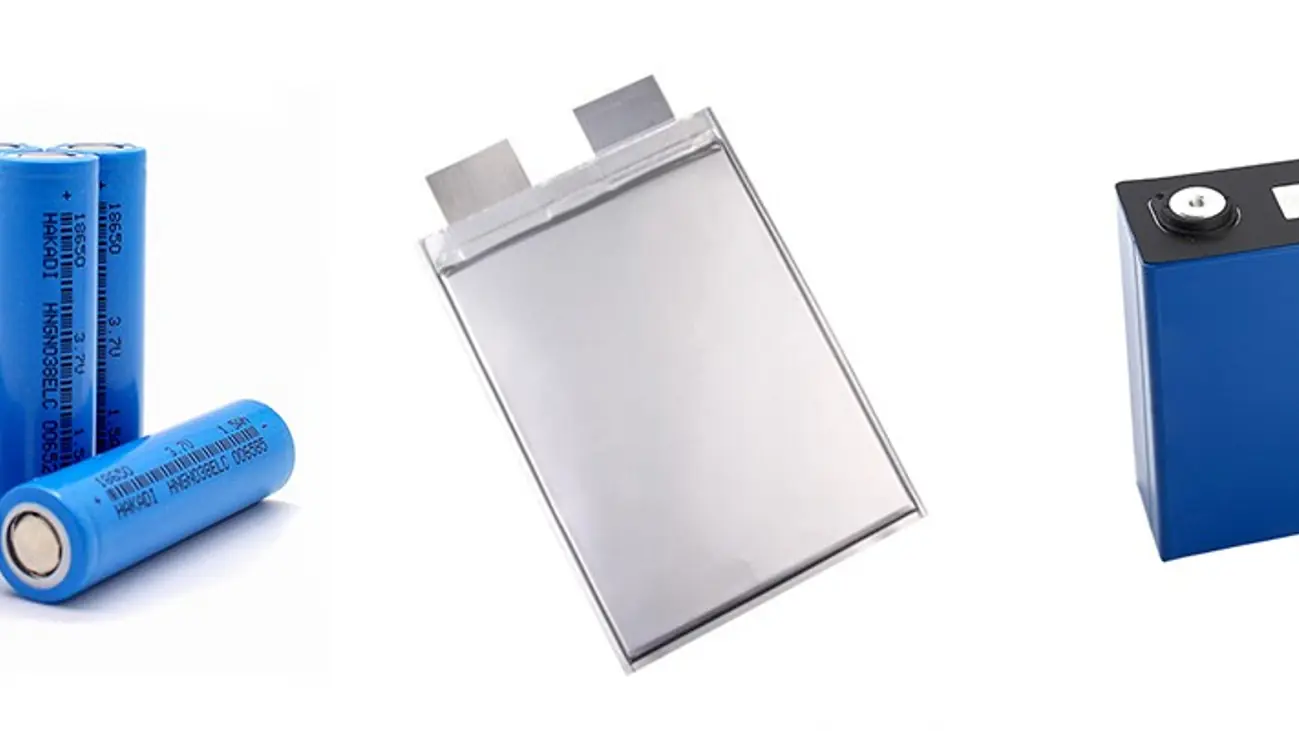
Portable power stations are built on one of two lithium chemistries: LiFePO4 (LFP) or NMC. Both charge from wall or solar and power your devices, but they trade off differently on weight, energy density, cycle life, cost and low-temperature behavior. For most buyers the LFP station wins on longevity and safety, while the NMC station wins when compact size and light weight at high capacity are the priority. This guide compares the two so you can pick the chemistry that matches how you actually use a power station.
The short version
LiFePO4 cells are heavier and less energy-dense but last roughly twice as many cycles, run cooler, and are more thermally stable and safer in abuse. NMC cells are lighter and pack more energy into a smaller space, but degrade faster on deep cycling and need more careful thermal management. For a station you use often, for years, the LFP version is the better lifetime value. For one you carry frequently — on a boat, in a van, for fieldwork — the weight and size savings of NMC can be worth the shorter cycle life.
Comparison at a glance
| Factor | LiFePO4 (LFP) | NMC |
|---|---|---|
| Energy density | Lower — heavier per Wh | Higher — lighter and smaller |
| Cycle life | 3,000-6,000 cycles | 800-2,000 cycles |
| Thermal stability | Very high, abuse tolerant | Lower, needs careful management |
| Safety in failure | More stable, less violent | Higher energy release, more care needed |
| Low temperature | Reduced performance below 0°C | Generally better cold behavior |
| Cost per Wh | Often lower over life | Higher, but smaller unit may be cheaper |
| Best for | Frequent, long-term, home and backup | Portable, weight-sensitive, occasional use |
Cycle life and total cost
The biggest practical difference is lifespan. A typical LFP cell is rated 3,000-6,000 cycles; an NMC cell 800-2,000. If you cycle a power station daily — powering a home office, running an appliance off-grid every evening — the LFP unit lasts several times longer before the capacity noticeably fades, so its higher price per watt-hour can actually be the cheaper option per year of use. If you use the station a few times a year, the cycle difference hardly matters and the cheaper or lighter unit wins.
Weight, size and portability
NMC's advantage is compactness. At the same capacity an NMC station is typically 20-35% lighter and smaller, which is meaningful if you carry it in a backpack, on a boat or between sites. At the same weight an NMC station holds more energy. This is why NMC persists in premium travel stations and in products where every kilogram counts. If the station mostly stays in one place — home backup, a fixed caravan site — the LFP version's weight is irrelevant and its longevity is pure advantage.
Safety and thermal behavior
LFP is more thermally stable and more tolerant of overcharge, over-discharge and internal defects, and in a failure it releases energy more gradually than NMC. NMC stores more energy per kilogram, which means a failure releases more energy and needs stronger protection and thermal management. Both chemistries are safe in a well-built station with a proper BMS and certified cells — the difference is margin and the care the design must take. For a product kept in a home or carried near people, the LFP margin is easier to live with.
Low-temperature performance
Both chemistries lose performance in the cold, but the behavior differs. LFP's usable capacity drops more at low temperatures and its charging can require heater support or derating near freezing. NMC generally holds cold-weather performance better. If you will charge or run the station outdoors in freezing conditions — winter camping, alpine fieldwork — check the station's charging temperature range and whether it has a self-heating feature, regardless of chemistry.
Decision guidance
Default to LiFePO4 for a station you will use often and keep for years, for home backup, or where you value safety margin and longevity over portability. Choose NMC when the station must be as light and compact as possible at high capacity and you use it occasionally, where the shorter cycle life matters little. In either case, verify the cell brand and certification, the BMS protection functions, the inverter type (pure sine wave) and the charging temperature range — chemistry is one decision in a longer list.
As a portable power station manufacturer, we offer LFP-based stations across the capacity range with certified cells, pure sine wave output and BMS protection. Tell us your use case — home backup, outdoor, fieldwork — and we will recommend the capacity and chemistry that fits.