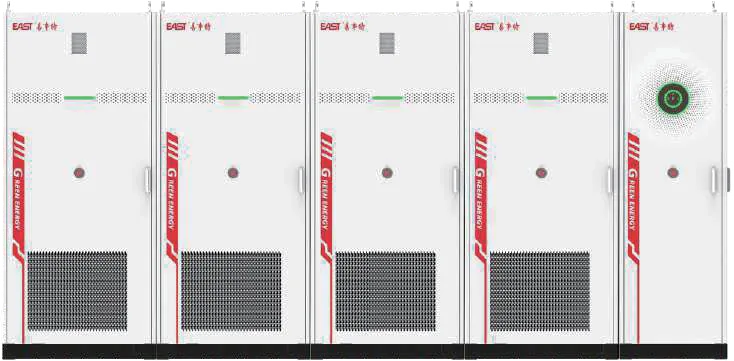
Both strategies reduce the amount of expensive energy you buy, but they attack different parts of the bill. Peak shaving cuts the demand charge — the fee based on your highest 15- or 30-minute draw in the month. Peak shifting moves energy from high-priced hours to low-priced hours under time-of-use (TOU) tariffs. Which one saves more depends entirely on your tariff structure and load profile. In markets with big demand charges, peak shaving usually wins; in markets with large peak-valley price gaps and no demand charge, peak shifting dominates. Most commercial systems today are configured to do both at once.
First, understand your two-part electricity bill
Commercial and industrial customers usually pay two components: an energy charge for the kilowatt-hours you consume, and a demand charge for the highest power you draw, typically measured over 15 or 30 minutes and billed per kilowatt. Demand charges can be 20% to 50% of a C&I bill, and they are pure fixed cost — one 30-minute spike in a month raises that line for the whole month. Time-of-use tariffs instead price each kilowatt-hour differently by hour: expensive at peak, cheap at valley. Your saving strategy must target whichever component dominates, and most sites have both.
What peak shaving actually does
Peak shaving flattens the top of your load curve. When demand approaches your highest point, the battery discharges to cover the extra load, so the grid draw never crosses the threshold. If your demand charge is, say, $15 per kW and you shave 200 kW off your peak, that is a $3,000 saving every month — before you count a single kilowatt-hour saved. The battery sizes not to the energy you need but to the power you need to clip, usually supported by 1 to 2 hours of storage. Peak shaving is measured by one number: the reduction in your monthly billed demand.
What peak shifting actually does
Peak shifting arbitrages the tariff: the battery charges at the cheap valley rate (or from midday solar) and discharges during the expensive peak window, so every kilowatt-hour you shift earns the peak-valley price difference. Under a tariff with a $0.10/kWh peak-valley gap, a 500 kWh system that cycles daily captures roughly $50 per day in energy-cost savings. The battery sizes to the energy available in the valley window and the energy demand in the peak window, not to a power target. Peak shifting is measured by the kilowatt-hours moved per day times the price gap.
Which tariff structure favors which strategy
There is a clean rule of thumb. If your bill has a large demand charge and your peak demand is spiky and short — a 30-minute production surge, a compressor starting, a shift change — peak shaving returns fast. If your bill is a flat energy charge with no demand component but a large peak-valley TOU spread, peak shifting is where the money is. Many sites have both: the answer is usually a hybrid mode where the battery clips the demand spike and arbitrages the tariff with whatever capacity remains. Ask your utility or rate consultant for the demand charge rate and the TOU schedule before sizing — the strategy follows the tariff, not the other way around.
A worked comparison: which saves more
Consider a factory with a 1,000 kW peak, a 300 kW, 2-hour spike that repeats on weekdays, and a TOU tariff with a $12/kW demand charge and a $0.08/kWh peak-valley gap. A 300 kW / 600 kWh system in pure shaving mode clips the spike: monthly demand saving is 300 kW x $12 = $3,600, plus a little energy savings. The same system in shifting mode moves 600 kWh daily at $0.08: $48 per day, roughly $1,050 per month. Shaving wins decisively here because the demand charge is large. Reverse the tariff — a $5/kW demand charge and a $0.15/kWh gap — and shifting's $2,250 monthly starts to close the gap, and a hybrid captures both. The takeaway: run the two calculations on your actual tariff before choosing a mode.
How the EMS decides in practice
Real systems do not run one strategy in isolation. A quality EMS forecasts the next day's load from history and weather, reserves power for the demand spike, and arbitrages the remaining capacity across TOU windows. It continuously decides: keep the ceiling under the demand threshold, charge when cheap, discharge when expensive, and never let the forecasted spike trip the billing threshold. This is why the EMS and the strategy configuration matter more than the battery hardware alone — two identical cabinets with different EMS logic produce very different savings. When you evaluate a commercial storage supplier, ask for the EMS strategy list and a case study with the actual tariff and measured savings, not just the battery datasheet.
Peak shaving sizing rules
For demand-charge-dominated sites, size the battery power to the tallest repeatable spike you want to clip, and the energy to the spike duration. A 2-hour spike needs roughly 2 hours of storage at the clip power; a 30-minute surge needs much less energy and a high discharge rate. Confirm the battery can discharge at the needed C-rate continuously, and check the demand interval your utility uses — 15-minute and 30-minute metering change the sizing. Add a margin for battery degradation and for unusual days, because missing the threshold by even one day raises the whole month's demand bill.
Peak shifting sizing rules
For TOU-dominated sites, size the battery to the energy you can move: the valley window hours times the charge power, capped by the peak window energy you want to displace. One daily cycle is the baseline; two cycles a day (lunchtime valley + night valley) roughly double the arbitrage per installed kWh if the tariff supports it. Check the minimum discharge time required by the peak window — a long peak window needs more energy, not more power. And verify the round-trip efficiency of the system, because the peak-valley gap you capture is reduced by the energy lost in charging and discharging.
Hybrid mode: the practical default
For most C&I sites, the practical default is hybrid: clip the demand spike with a reserved power window, and arbitrage the remaining capacity across TOU hours. The EMS holds a power reserve for the forecasted spike and uses the rest for energy arbitrage, switching priority when the spike materializes. This captures most of both savings with one system. The exact split depends on your tariff and load — a good supplier will model both and recommend a configuration, then validate it with the first month of metered data. As a manufacturer of all-in-one commercial energy storage systems, we configure EMS strategies per site — including peak shaving, demand control, TOU arbitrage and hybrid modes — and we will model your tariff before you buy.