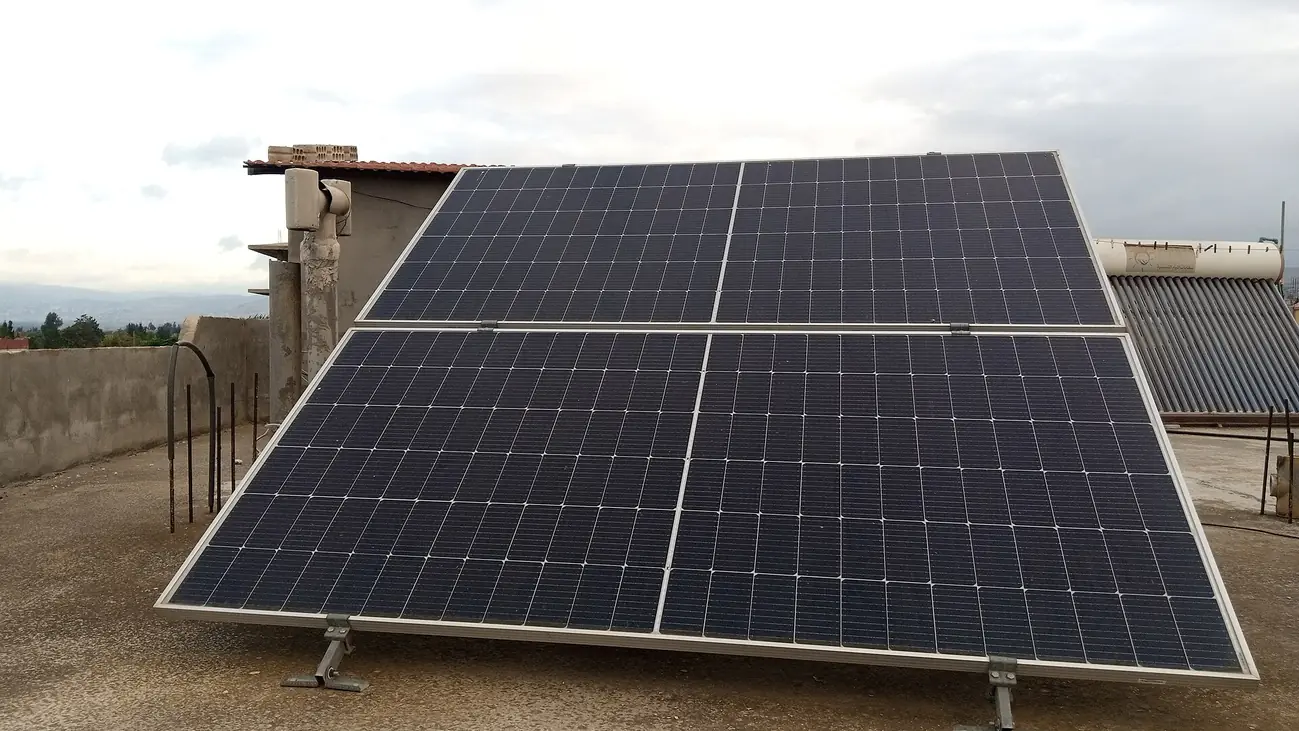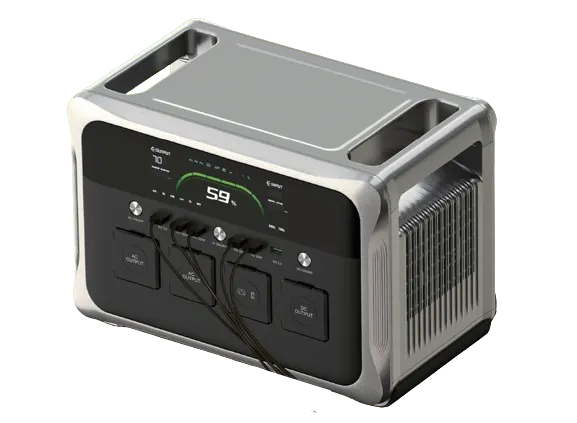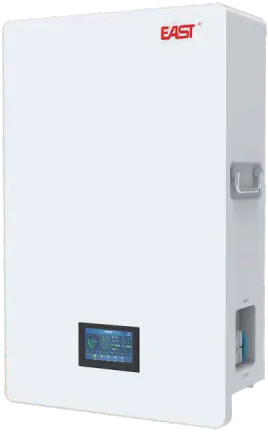
A portable power station is a wheeled or carry-handle unit with a battery, an inverter and AC sockets in one box; a home battery is a fixed, wired pack that works with an inverter or a hybrid system and the building's distribution board. The difference is not brand or price tier — it is where the energy goes: sockets you carry to the load, or a circuit that feeds the load. That single fact decides what each product can back up, who may install it, and how the quotation is structured.
What is the difference between a portable power station and a home battery?
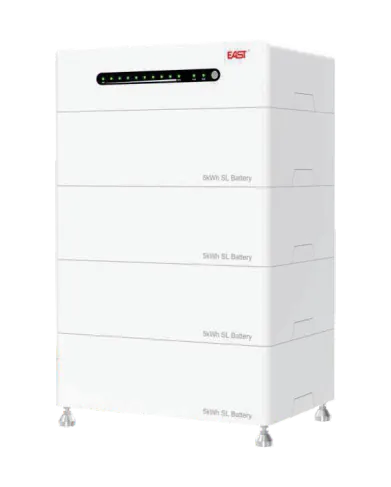
The portable unit is a self-contained appliance: battery, BMS, inverter and outlets in one enclosure, plugged into a wall socket or PV panel to charge and carried to where it is needed. The home battery is a component of a fixed installation — a 51.2V rack, stack or wall-mounted pack that connects to an inverter, a distribution board and usually the grid, under a fixed wiring design. One is bought like an appliance and used like an extension cord; the other is bought like equipment and commissioned like part of the building.
How much backup does 800Wh actually give you?
Take our 600W portable power station: 960Wh nominal with 800Wh usable, LiFePO4 cells, a 600W rated AC output, and MPPT solar input up to 600W at 12–60V. Usable energy divided by load gives the runtime at that load — 800Wh into a 600W load is about 1.3 hours, into a 100W load about 8 hours. The load figure is the nameplate of whatever you plug in, so the honest way to size a portable unit is to list the appliances you want to keep alive and add their watts, not to count rooms. If the total exceeds the rated output, the inverter trips regardless of how much energy is left in the pack.
What can a 5.22kWh home battery run?
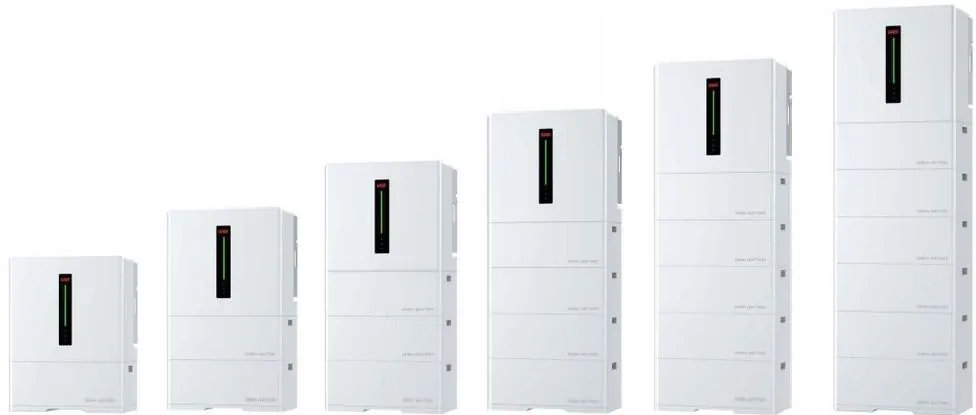
A wall-mounted LiFePO4 home battery in our range is rated 5.22kWh at 25.6V or 51.2V with IP21 protection; the stackable version covers 5.22–20.89kWh at 51.2V with IP54, the 314Ah rack family reaches 10.04–40.19kWh, and the all-in-one cabinet pairs a 6kW inverter with 5.12–30.72kWh in 5.12kWh modules. Because it feeds a distribution board rather than a socket strip, it can hold selected circuits — lighting, refrigeration, router, a pump — through a transfer switch or an inverter designed for backup, and its capacity is expanded by adding modules rather than by buying another box.
Side-by-side comparison
| Decision point | Portable power station | Home battery |
|---|---|---|
| Typical energy band | 0.32–0.96kWh in the units above | 5.12–40.19kWh depending on family |
| Output | 300W rated / 600W peak to 600W rated, 230V 50Hz sockets | Through an inverter, e.g. 6kW in the all-in-one cabinet |
| Installation | None — plug in, carry, use | Fixed wiring, transfer switch or hybrid inverter, commissioning |
| What it backs up | Whatever you plug into it | Chosen circuits of the building |
| Recharge | Wall socket or PV, MPPT 12–60V up to 600W | Grid, PV through the inverter, or both |
| Expansion | Buy a second unit | Add battery modules to the same system |
| Best fit | Outdoor use, mobile work, short outages, single appliance | Daily cycling, tariff arbitrage, whole-home or C&I backup |
When is a portable power station the right choice?
Choose portable when the load moves with you or the outage is short. Site work, outdoor events, a market stall, a telecom cabinet, a medical device that must keep running during a two-hour cut — all of these need energy at a place, not energy in a building. The unit also earns its keep in daily life (camping, tools, backup for a router or CCTV), which is why distributors sell it as a retail appliance rather than an installation. The limits are equally clear: no integration with the distribution board, no automatic transfer, and capacity that is fixed at the price you paid.
When do you need a home battery instead?
Choose a home battery when the load stays put and the requirement repeats. If the outage is a daily load-shedding schedule, if the goal is to shift PV generation into the evening, or if the site must keep a pump, a cold room or a production line alive, the energy has to be wired into the building and sized against a load profile rather than a socket count. A fixed system also brings monitoring, per-module expansion and a warranty structure that matches a capital asset — things an appliance-shaped product cannot offer.
Can you use both in one project?
Yes, and it is a common configuration in markets with unreliable grids: the home battery carries the wired circuits and cycles daily, while a portable unit covers portable work and serves as a fallback if the fixed system is being serviced. The two do not need to talk to each other; they simply answer different questions. For installers and distributors, offering both lets one customer relationship cover the retail buyer and the project buyer, which is why we produce the portable family and the home battery families on the same cell and BMS platform.
What to confirm in a quotation
| Field | Why it matters |
|---|---|
| Nominal vs usable energy | Rated capacity and usable capacity differ; runtime must be quoted on usable kWh |
| Rated vs peak power | Motor and compressor loads draw a surge above nameplate |
| Output form | Pure sine wave at the market's voltage and frequency |
| Chemistry and cell grade | LiFePO4 cells; ask for the cell brand and grade in the contract |
| Protection rating | IP class must match indoor wall, garage or outdoor cabinet placement |
| Certification scope | Certificates must name the exact model, not the product category |
If you tell us the loads, the outage duration and where the unit will sit, we will size the portable unit or the home battery family against those numbers and send the datasheet for the exact model — no estimate is quoted as a specification.