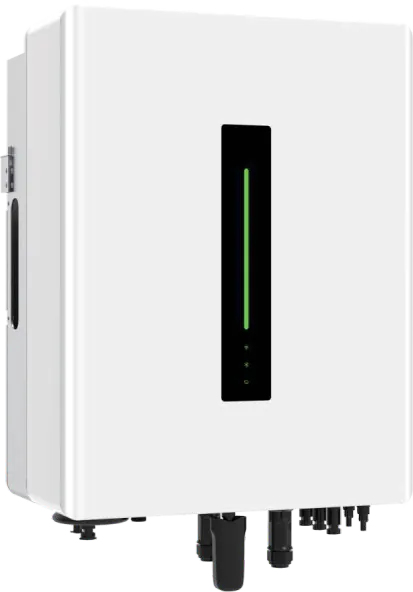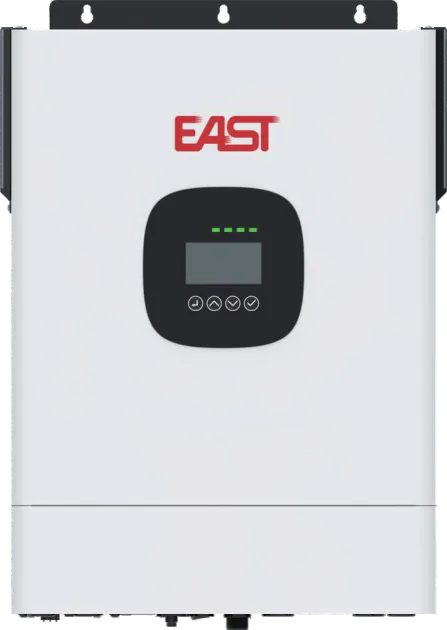
The difference between a hybrid inverter and an off-grid inverter is not the inverter itself — it is the relationship to the grid. A hybrid inverter works with the grid when it is present, and falls back to battery backup when it is not. An off-grid inverter assumes there is no grid at all and manages everything from PV and battery alone. Choosing between them is the first decision in any solar-plus-storage project, and it depends almost entirely on one question: is the site grid-connected, and does it want to keep grid connection? This guide explains the difference and the selection rule.
What each inverter does
A hybrid inverter combines a solar inverter and a battery inverter in one unit, connects to the grid, feeds surplus solar to the grid when it makes sense, charges the battery, and switches to backup power when the grid drops. An off-grid inverter works standalone: it builds the grid — the frequency and voltage — from PV and battery alone, and runs loads without any utility connection. The practical difference shows in grid connection: a hybrid inverter is a grid-tied device that can island; an off-grid inverter never assumes the grid exists. One phrase captures it: hybrid is "on-grid with backup", off-grid is "no grid, ever".
Key comparison points
Six points separate them. Grid connection: hybrid ties to the grid and can export; off-grid does not connect at all. Backup: both provide battery backup, but hybrid switches automatically when the grid drops while off-grid always runs on battery. Solar sizing: hybrid can be sized larger and export surplus; off-grid must size the battery to cover every load, because there is no grid to lean on. Load management: off-grid must manage starting surges strictly, since the battery is the only source; hybrid can draw from the grid for short peaks. Cost and complexity: off-grid systems need the battery sized for worst-case load and often a generator for extreme days, adding cost; hybrid uses the grid as a cheap buffer. Use case: off-grid is for cabins, remote sites and islands; hybrid is for grid-connected homes and businesses that want backup and solar economics.
The selection rule in one sentence
If the site is grid-connected and you want backup plus solar savings, choose a hybrid inverter. If there is no grid — a cabin, a remote worksite, an island — choose an off-grid inverter and size the battery for your worst day. That single rule resolves most projects. The edge cases are sites that might get a grid connection later: a hybrid inverter on a grid-less site can often run off-grid in the meantime, and a hybrid system can be configured to operate in an islanded manner where needed.
Battery sizing differs sharply
The battery sizing logic is completely different. With a hybrid system, the battery covers backup loads and arbitrages tariffs; it does not need to run the whole house, because the grid is there for the peaks. With an off-grid system, the battery must cover the entire load every day, including the worst-case day and the starting surges of motors — which means roughly two to three times the battery of a grid-connected equivalent. Off-grid installers often size to 2-3 days of autonomy plus a generator for extended cloud or winter periods. Hybrid installers size to backup hours and tariff arbitrage. The same house needs a very different battery depending on which inverter it chooses.
Voltage, phase and battery compatibility
Whichever type you choose, three matching checks apply. Battery voltage platform: the inverter DC input must cover the battery voltage across all states of charge, and the BMS communication protocol must be compatible. Phase and power: single-phase inverters suit standard homes, three-phase for larger loads and commercial sites — confirm the phase and the continuous and peak power against your loads. Grid standard: a hybrid inverter must be certified for the local grid code and interconnection rules, while an off-grid inverter needs the right AC output standard and islanding behavior for your market. These checks matter more than the inverter marketing name.
Cost and system architecture
Hybrid systems tend to be simpler and cheaper for grid-connected sites: one inverter handles solar, battery and grid, and the battery can be smaller. Off-grid systems add real cost: a larger battery, often a generator, a charge controller and more engineering for load management, but they deliver independence. When you compare, compare the whole system, not the inverter price — an off-grid system's true cost includes the battery bank, the generator and the installation complexity. For a grid-connected site that wants backup, the hybrid is almost always the lower-cost, lower-risk architecture.
When an off-grid inverter is the right call
Off-grid is not a compromise when the grid genuinely does not exist or is unreliably expensive to connect. Cabins, remote telecom sites, farms, mobile worksites and islands are natural off-grid territory, and a well-sized off-grid system can be more reliable than an unstable grid. The rules for success: size the battery for worst-case autonomy with a generator fallback, manage inrush currents in the design, and keep the PV slightly oversized so the battery recharges on cloudy days. If your customer is genuinely remote, off-grid is the correct, not the cheaper, choice.
Procurement for installers and distributors
For installers and distributors, the practical questions are: which markets need which type, and how do you avoid carrying two overlapping product lines? In grid-connected markets, hybrid inverters dominate new solar-plus-storage installs, so stock hybrids across the single-phase and three-phase range and one off-grid line for rural and remote niches. Confirm with the factory: the compatibility list with battery brands, the grid code certifications for your target markets, the parallel and expansion capability, the warranty and spare parts, and the EMS or app features. As a manufacturer of hybrid and off-grid inverters — single-phase and three-phase — we provide the compatibility list, grid-code certifications and wiring diagrams on request, and we will confirm the right inverter type and configuration for your project before you order.