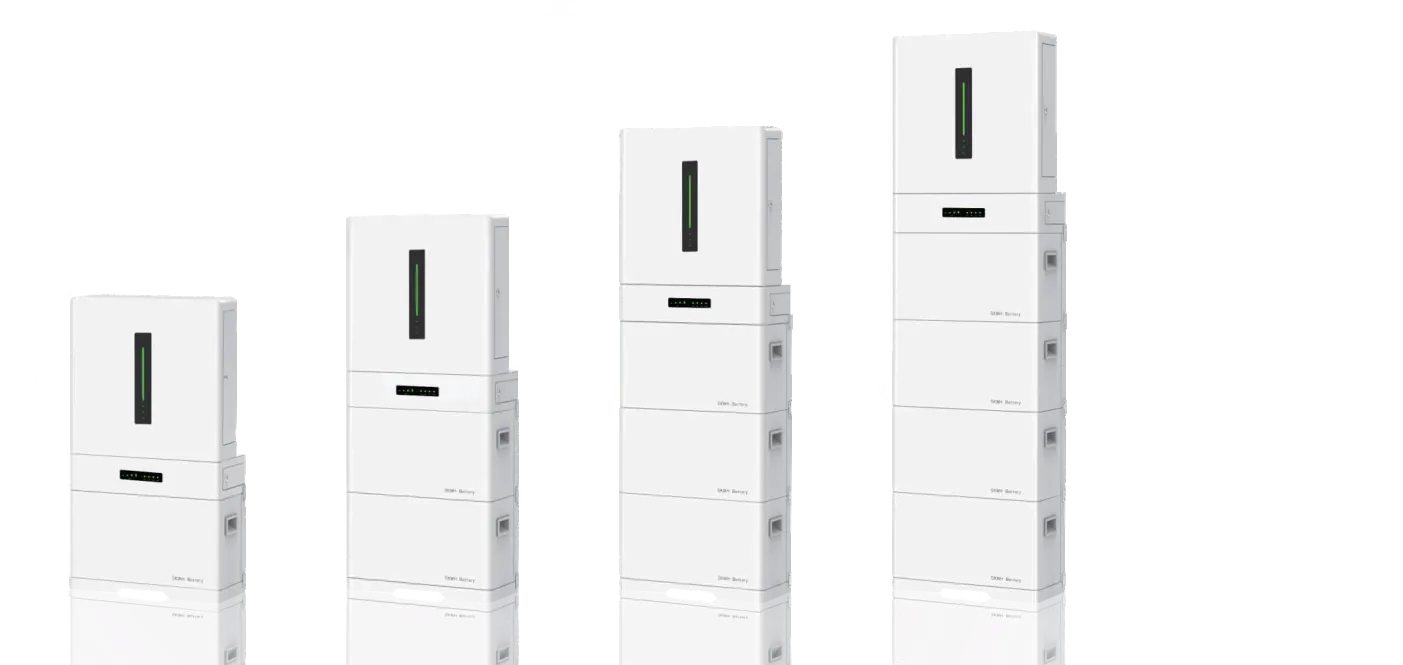
A single-phase home storage system connects to one live conductor at 230 V; a three-phase system connects to three live conductors at 400 V line to line and 230 V line to neutral. The inverter changes first, but the decision does not stop there: the battery has to sit inside that inverter's DC voltage window, and between our own single-phase and three-phase models those windows differ by more than a factor of ten.
What is the difference between a single-phase and a three-phase home battery system?
A single-phase system draws from one live conductor and a neutral; a three-phase system draws from three live conductors and a neutral. In both, the battery stores DC and the inverter produces AC, so the difference is not the cell chemistry but the AC side the inverter synchronises with and the DC window it offers the pack.
That drives the rest of the design. A single-phase inverter has one output to regulate, one current to keep inside the service rating, and no way to serve a load wired across three phases. A three-phase unit has three outputs, must keep them within the balance limits of its design, and can hold three-phase loads up through an outage.
The phase is also a site condition, not a preference, because the building decides it: a German single-family house from the last twenty years often has 400 V three-phase, a British house usually single-phase 230 V, and a North American house a split-phase 120/240 V service that is neither.
Does the battery change too when you move to three-phase?
Yes, and this is where most quotations go wrong. Our single-phase hybrid inverters take a 42-58 V battery window; the three-phase hybrid inverter is quoted at 150-600 V; the three-phase all-in-one at approximately 650-980 V. A 51.2 V stack cannot be wired to a three-phase unit, so the phase decision selects the battery family.
| Model family | Grid side | Rated output | Battery window |
|---|---|---|---|
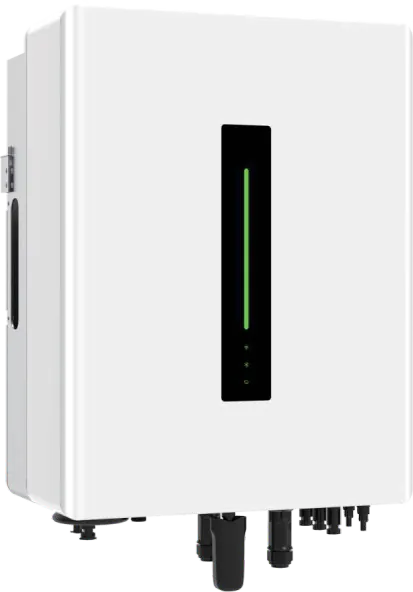
| EAHI-3000/3600/5000/6000-SL | Single-phase 230 V | 3 / 3.6 / 5 / 6 kW | 42-58 V |
| EAHI10KSL / EAHI12KSL | Single-phase 230 V | 10 / 12 kW | 42-58 V |
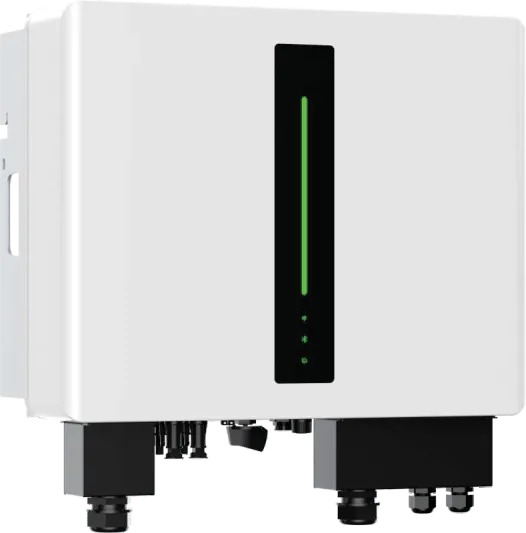
| EAHI10KTH / 15KTH / 20KTH | Three-phase 400 V | 10 / 15 / 20 kW | 150-600 V |
| EAHI10KTH-S / 15KTH-S / 20KTH-S | Three-phase 400 V | 10 / 15 / 20 kW | Approx. 650-980 V |
The reason is current. Six kilowatts from a 51.2 V pack is about 117 A on the DC side; inside a 400 V platform the same power is about 15 A. Up to roughly 12 kW a low-voltage pack stays workable and easy to service; above that, copper and switching losses push the design to a high-voltage string.
So the battery is not a free choice once the inverter is fixed. The 6 kW single-phase hybrid sits on a 42-58 V pack such as the 51.2 V stackable family at 5.22-20.89 kWh, while the three-phase range expects a high-voltage string - which is why the 750 V family is quoted at a 600-1000 V operating range. Confirm the window on both documents before the container ships; there is no field fix for a pack outside it.
What limits how much power a single-phase system can deliver?
The service current. Six kilowatts at 230 V is 26.1 A and twelve kilowatts is 52.2 A, so a 12 kW single-phase inverter uses almost the whole of a 63 A domestic service on its own while the house still runs beside it. This is a fuse-and-meter question before it is a battery question.
Three loads usually set the ceiling: a 7.4 kW single-phase EV charger at 32 A, an electric shower or 3 kW immersion heater at about 13 A, and a heat pump whose compressor surge runs well above its running watts. Add them and 6 kW stops looking small. The inverters are not the constraint - EAHI-3000-SL to EAHI-6000-SL covers 3 to 6 kW on that 42-58 V window at IP66, and EAHI10KSL and EAHI12KSL reach 10 and 12 kW with up to 18 kW of PV input - but cable and service rating have to follow.
What does three-phase backup actually add?
Three-phase loads stay alive. A heat pump, an 11 kW EV charger or a workshop motor wired across three phases needs all three conductors, so a single-phase inverter leaves those loads dead even with a full battery. That is why three-phase backup sells where heating and hot water are electric.
It also spreads the current. A 20 kW three-phase unit delivers about 6.7 kW per phase, roughly 28.9 A at 230 V per phase, so it can be fed from an existing three-phase consumer unit; the single-phase equivalent would need about 87 A on one conductor, which most domestic services cannot supply.
Two details belong in the design rather than the datasheet. Loads on a three-phase backup should be spread across L1, L2 and L3, because a heavy single-phase load on one leg limits the whole system. And the neutral must be handled by the inverter or by a transfer arrangement designed for it, so the installer's wiring diagram is part of the product decision. The hardware is on the EAHI10-20KTH three-phase hybrid inverter page, with the same power range as a cabinet on the EAHI10-20KTH-S all-in-one page.
How do you confirm which supply the building actually has?
Read the service equipment before quoting. Three-phase means three fuses or main switches, conductors marked L1, L2 and L3, and a 230/400 V meter; single-phase means one live, one neutral and a 230 V meter. Photograph it and confirm with the distribution network operator rather than guessing from the building's age.
Market patterns are a starting point, not a rule. Continental Europe often supplies 400 V three-phase, especially to new builds with heat pumps or an 11 kW charger; the UK and Ireland are dominated by single-phase 230 V with a chargeable upgrade; North America's split-phase 120/240 V is not three-phase at all, so an imported three-phase inverter is the wrong product there.
Which packs fit on each side of the decision?
The pack families are quoted for different windows, so the table is the shortlist. Compare usable energy rather than nameplate: at 90% depth of discharge a 5.22 kWh pack delivers 4.70 kWh, a 10.04 kWh pack delivers 9.04 kWh and a 40.19 kWh pack delivers 36.17 kWh.
| Pack | Energy | Voltage | Window fit |
|---|---|---|---|
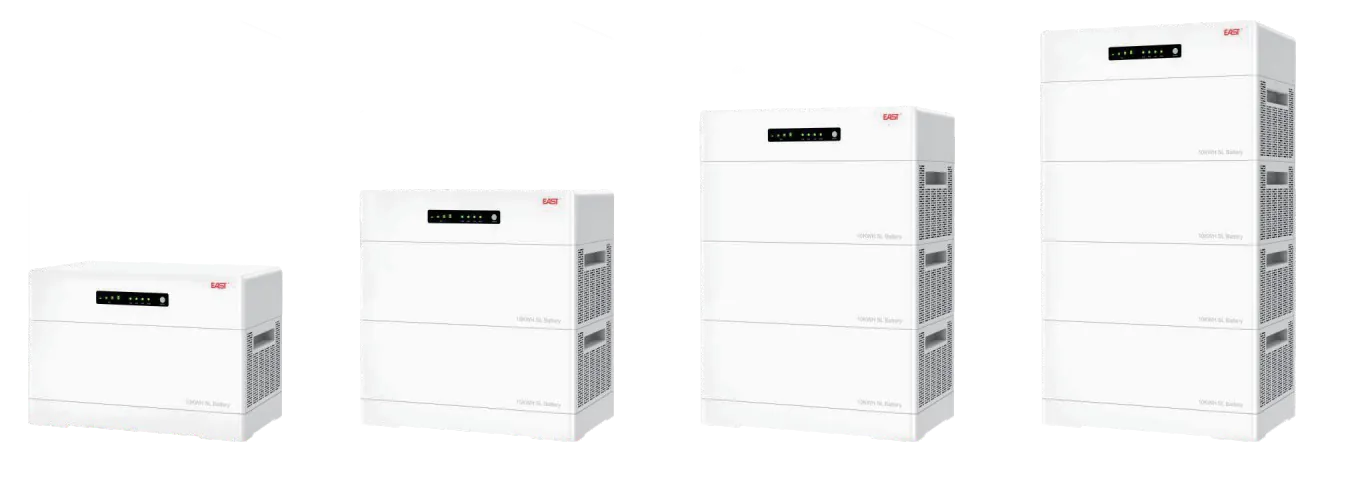
| 48 V 100 Ah stackable | 5.22-20.89 kWh | 51.2 V nominal | Single-phase 42-58 V |
| 48 V 314 Ah stackable | 10.04-40.19 kWh | 51.2 V nominal | Single-phase 42-58 V |
| Wall-mounted 5.22 kWh | 5.22 kWh | 25.6 V or 51.2 V | Single-phase 42-58 V (51.2 V version) |
| 750 V 314 Ah stackable | 10.04-40.19 kWh | 750 V nominal, 600-1000 V range | Three-phase high-voltage platform |
Certification travels with the pack, not with the brand. The 48 V 314 Ah stackable is quoted with IEC 62619, IEC 63056 and UN 38.3; the 750 V family with UN 38.3 and CE-EMC; the single-phase cabinet EAHI-6000-SL-S lists IEC 62619, IEC 60730, IEC 62040-1, UN 38.3, RoHS 2.0 and VDE 2510-50. Ask for the certificate naming the exact model, because a three-phase project cannot be rescued by a certificate issued for a 48 V family. The high-voltage side is on the 750 V 314 Ah stackable battery page.
What should a distributor stock for a mixed market?
Carry one family per phase rather than a long list of models, because the phase is the first thing a site visit establishes. Where heat pumps and 11 kW chargers are common the three-phase range carries the volume; on single-phase services the 6 kW units do most of it, with 10 and 12 kW covering upgrades.
| Site condition | Inverter side | Pack side | Typical buyer |
|---|---|---|---|
| Single-phase 230 V, basic backup | 3-6 kW single-phase hybrid | 5.22-10.04 kWh, 51.2 V | Entry household, outage market |
| Single-phase 230 V, PV plus EV charger | 10-12 kW single-phase hybrid | 10.04-20.89 kWh, 51.2 V | Upgrade household, installer |
| Three-phase 400 V, heat pump or charger | 10-20 kW three-phase hybrid | High-voltage string, 10.04 kWh modules | New build, electric heating |
| Three-phase 400 V, cabinet install | 10-20 kW all-in-one cabinet | Approx. 650-980 V window | Project and C&I crossover |
Documentation is what makes a two-family lineup sellable: the datasheet for the matched pair, the wiring diagram for the backup arrangement, and the certificate set naming each model. Where a grid application is required before installation, phase, export limit and inverter model number are the three fields the form asks for.
What belongs in the quotation?
A quotation that names only the inverter kW and the battery kWh is not a specification. Phase, per-phase current, battery voltage window and certificate scope decide whether the system can be installed at the site at all, so those fields belong on page one.
| Field | Why it decides the order |
|---|---|
| Supply phase and service rating | A 12 kW single-phase unit needs service current headroom before it needs more battery |
| Battery voltage window | A 51.2 V pack cannot be wired to a 150-600 V three-phase input |
| Per-phase output and balance | Unbalanced single-phase loads on one leg limit the whole system |
| Backup scope | Three-phase loads stay on only if all three conductors are fed in backup mode |
| Certificate that names the model | Certification for a 48 V family does not cover a high-voltage three-phase unit |
| Grid application data | Phase, export limit and model number are what the connection form asks for |
Tell us the supply phase, the service rating, the loads to keep alive and the destination country, and we will quote the inverter with its matched pack and the certificates for the exact models. If the site is still undecided, start from the whole-home kWh guide and inverter and battery matching; the full range sits under solar inverters and PCS.